AI Robotics Coding Training for High School Students (Grades 9–12)
The aim of this training program is to provide middle and high school students with hands-on robotics and coding education at the METU Continuing Education Center (SEM), in accordance with internationally recognized standards.
About the Training
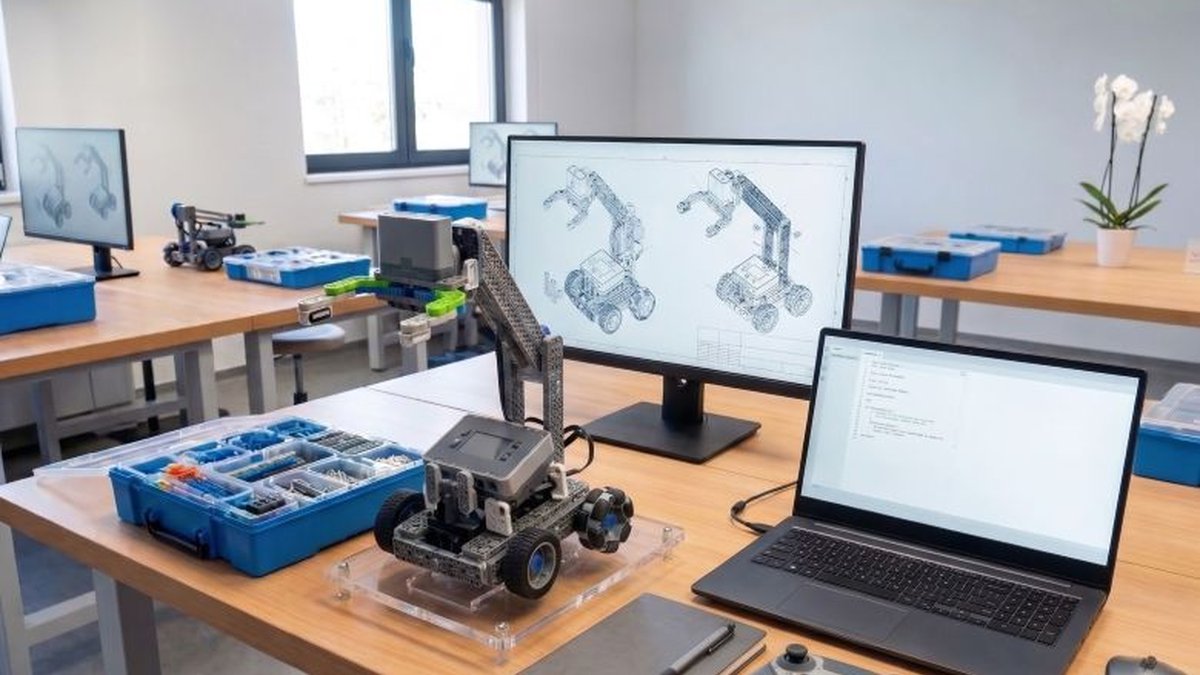
The aim of this training program is to provide high school students with hands-on robotics and coding education at the METU Continuing Education Center (SEM), in accordance with internationally recognized standards. The program adopts a constructivist approach through a fully functional, game-based learning platform integrated with educational robotic kits developed within the scope of the project titled “Implementation of Game-Based Learning in Educational Robotics for Artificial Intelligence Education.” The program aims to develop students’ problem-solving, algorithmic thinking, and teamwork skills.
Topic Titles
Introduction to Sensors and Coding
Beginning Robot Construction and Fundamentals of Virtual Driving
Chassis Completion, Teleoperation, and Code Efficiency
Mechanism Design and Sensor Logic
Mechanism Integration and Autonomous Code Transfer
Tournament Preparation and Strategy
Course Objectives
Key Skills to Be Developed:
Information literacy
Media literacy
Problem-solving skills
Algorithmic thinking skills
Teamwork skills
Critical thinking
Creative design skills
A. Mechanical and Hardware Skills
Identifies and correctly uses the VEX IQ hardware and electronics ecosystem—including the Brain, Smart Motors, Sensors, Structural Beams, and Connectors—using appropriate technical terminology and for their intended purposes.
Understands fundamental mechanical concepts and applies gear ratio calculations, including the relationship between speed and torque, in robot design.
Explains and applies the operating principles of simple machines, including gears, axles, wheels, and beams.
Understands the operating principles of basic sensors, such as distance, touch, and optical sensors, and integrates them into robotic systems.
B. Programming and Algorithmic Thinking Skills
Develops and codes autonomous robot movements using the VEXcode IQ block-based programming environment, applying algorithm design, loops, conditional statements (if/else), and advanced algorithmic structures.
Designs, programs, and develops a functional basic robotic system to solve a given problem.
Analyzes technical or logical problems encountered during the development process, evaluates alternative solutions, and selects the most appropriate one (Problem-Solving Skills).
Breaks down complex tasks into smaller, sequential steps; organizes these steps in a logical order; and develops and codes algorithms accordingly (Algorithmic Thinking Skills).
C. Social and Collaborative Skills
Experiences professional roles within a robotics team—including Mechanical Designer, Programmer, Strategist, and Recorder—and develops 21st-century skills in teamwork, collaboration, and problem-solving under pressure.
Actively participates in teams formed in accordance with the constructivist learning approach; shares ideas toward a common goal, takes responsibility, and collaborates effectively with team members (Teamwork Skills).
D. Engineering Design and Evaluation Skills
Applies the engineering design cycle (Plan → Build → Test → Evaluate → Improve).
Makes improvements to robot designs based on test results.
Independently carries out the debugging process.
Demonstrates an engineering-oriented approach to problem solving and design.
Certification
At the end of the training program, participants who fulfill the mandatory attendance requirement of 70% will be entitled to receive a “Certificate of Participation.”
The total number of hours attended will be indicated on the certificate of participation.
Application Requirements
High School (for students in Grades 9–12)
Participants are required to bring their own laptop or tablet to use the coding environment and to continue working outside of course hours. For participants who do not have access to such a device, the necessary equipment may be provided by the METU Continuing Education Center (SEM) during course hours.
Instructors
Doç. Dr. Tarkan Gürbüz
View Profile →Prof. Dr. Ömer Delialioğlu
View Profile →Training Summary
If you are not registered, create an account now.
Purchasing for 15 or more people?
Request a Corporate Offer