Turkey's Grand Strategy: From the Republic to the Present Day Training
About the Training
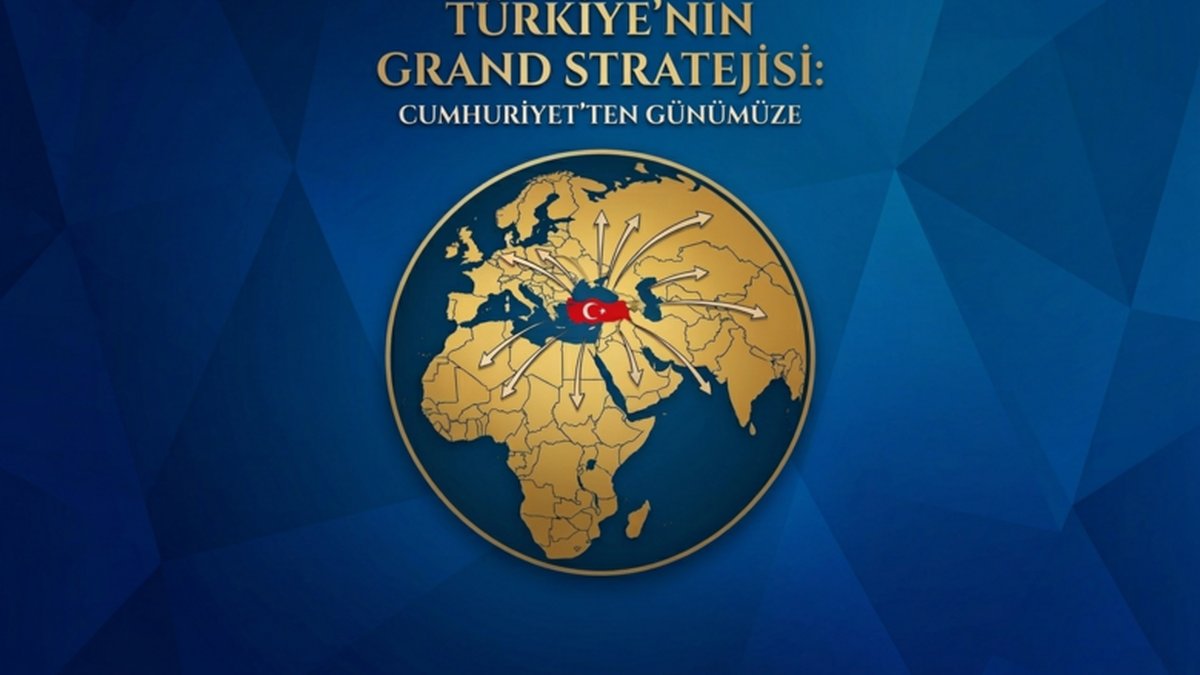
This program aims to provide participants with a comprehensive understanding of Turkey's grand strategy from the founding of the Republic to the present day.
The program analyses Turkey's approximately one-century-long strategic orientation through key historical turning points, examines the structural relationship between foreign policy, security architecture, and economic models in each period, and evaluates current geopolitical positioning within the context of historical continuity.
The training is specifically designed to enable foreign diplomats to understand Turkey's foreign policy evolution, security priorities, and economic transformation, thereby allowing them to better grasp Turkey's strategic decision-making processes and its role in regional and global relations.
Course Objectives
Upon completion of this training, participants will be able to:
•Understand the historical evolution of Turkey's foreign policy and security strategies from the founding of the Republic to the present day
• Analyse the relationship between Turkey's domestic political developments and its grand strategy
• Grasp Turkey's multi-dimensional foreign policy approach and its relations with major powers (USA, Russia, China, EU)
• Evaluate Turkey's regional policies in the Middle East, the Balkans, the Caucasus, and Africa
• Understand Turkey's defence and security policies within and beyond the NATO framework
• Analyse Turkey's economic transformation, trade strategies, and energy and infrastructure policies
• Gain insight into Turkey's "Century of Turkey" vision and its strategic implications
Course Content
1: The Founding of the Republic and the Single-Party Period (1923–1950)
Foreign Policy and Security
The foundation of the Republic and the principle of "Peace at Home, Peace in the World"
Western alliance orientation and preservation of the status quo
Policy of neutrality during the Second World War
NATO membership and integration into the Western security architecture
Economy
Statist economic model and import-substitution industrialisation
Agricultural modernisation and land reforms
Infrastructure development and nation-building economy
State Economic Enterprises (SEEs) and economic sovereignty
Industry, Trade and Foreign Capital (1923–Present)
2: Multi-Party Democracy and the Cold War Period (1950–1980)
Foreign Policy and Security
The Cyprus issue and Greek-Turkish relations
Middle East policies and regional balancing
Turkey's role as the southern flank of NATO during the Cold War
Military interventions and their effects on foreign policy
Economy
Liberal economic opening and foreign investment
Mechanisation of agriculture and export orientation
Deepening of import-substitution industrialisation
Memberships in International Institutions (1945–Present)
3: The Post-Cold War Period and Multi-Dimensional Diplomacy (1980–2002)
Foreign Policy and Security
The end of the Cold War and the new strategic environment
Relations with the newly independent Turkic republics
The Gulf War and Middle East interventions
EU candidacy and democratisation reforms
Reunification efforts in Cyprus and the Annan Plan
Economy
January 24, 1980 economic stabilisation programme
Neoliberal transformation and export-led growth
Privatisation of state enterprises
Integration into global financial markets
Economic crises and relations with the IMF
4: Regional Power Aspirations (2002–2016)
Foreign Policy and Security
"Zero problems with neighbours" doctrine
The Arab Spring and changing Middle Eastern dynamics
The Syrian civil war and the refugee crisis
Relations with Russia: cooperation and competition
Relations with the USA: tensions and strategic divergence
Economy
Economic growth and transformation
Modernisation of the banking sector
EU membership efforts, Customs Union, and economic and trade relations with the EU
5: The Arab Spring and the Period of Regional Turbulence (2011–2016)
Foreign Policy and Security
The Arab Spring process: the Libya intervention, the Morsi period in Egypt, the break with Assad in Syria
The Syrian civil war and Syrian refugees: security and social policy implications
The ISIS threat
The 2015 Russian aircraft crisis and tensions with Moscow
The July 15, 2016 coup attempt and restructuring of the security architecture
Strategic rupture with the West
Economy
Current account deficit vulnerability after 2011
Expansion of the CBRT policy toolkit and macroprudential measures
The December 17–25 process and the economic effects of political uncertainty
Economic balances after July 15
Mega infrastructure projects, Turkey’s role as a logistical and geo-economic bridge between East and West
6: The Quest for Strategic Autonomy (2016–Present)
Foreign Policy and Security
Syrian operations: Euphrates Shield, Olive Branch, Peace Spring
Eastern Mediterranean tensions, the Libya intervention, and the maritime jurisdiction agreement
The Karabakh War (2020) and military-diplomatic engagement
The S-400 crisis and CAATSA sanctions
Balancing policy in the Russia-Ukraine War
Normalisation diplomacy (UAE, Saudi Arabia, Egypt)
Multipolarity and the strategic autonomy discourse
Economy
The heterodox monetary policy period (2018–2023)
Return to orthodox policies after 2023 and the disinflation programme
Growth in defence industry exports and growth in domestic content ratios
Energy policies: Black Sea gas, Akkuyu Nuclear Power Plant, Turkey’s goal of becoming an energy hub, energy independence and green transition plans
Certification
Participants who meet the 70% attendance requirement will be entitled to receive a "Certificate of Participation" at the end of the training.
The total hours of attendance will be indicated on the certificate of participation.
Application Requirements
Diplomats serving in foreign embassies and international organisations in Turkey, foreign policy analysts and researchers working on Turkey, international relations professionals working on Turkish affairs, journalists and correspondents covering Turkey.
Prerequisites: Professional background in diplomacy, international relations, or related fields. Advanced understanding of international politics and regional dynamics is preferred.
Instructors
Dr. Gülsüm Akbulut
View Profile →Prof. Dr. Hüseyin Bağcı
View Profile →Training Summary
If you are not registered, create an account now.
Purchasing for 15 or more people?
Request a Corporate Offer